Mindfulness meditation has become a worldwide phenomenon. We hear about it as people’s regular practice of mindfulness as well as being used as a mindfulness therapy in a clinical setting. Though most of us have heard of mindfulness, we might not know its roots lie in Buddhism.
In this blog post, we will explore mindfulness works the Buddhist and modern definitions, what their practices are, and what makes them mindfulness.
- What are the Benefits of Mindfulness Practice?
- What does Mindfulness mean? The Buddhist Origins of Mindfulness
- Practice Mindfulness as a tool for Awakening and Wellbeing
- Modern Mindfulness Practice to boost the Mental and Physical Health
- What are the Differences Between Buddhist and Modern Mindfulness Meditation?
- Practicing Mindfulness Meditation and Buddhist Meditation

What are the Benefits of Mindfulness Practice?
Mindfulness is a mental practice that involves bringing one’s attention to the present moment without judgment. It has gained significant popularity due to its numerous benefits for mental, emotional, and physical well-being. Some of the key benefits of formal mindfulness practice include:
- Reduced stress: Mindfulness helps individuals develop better coping mechanisms and reduces the impact of stress on their minds and bodies.
- Improved focus and concentration: Regular mindfulness practice enhances attention span and cognitive abilities, leading to better focus and productivity.
- Enhanced emotional regulation: Mindfulness cultivates awareness of emotions, allowing individuals to respond to challenging situations with greater composure and resilience.
- Increased self-awareness: Mindfulness enables individuals to understand their thoughts, feelings, and behaviors better, leading to greater self-insight and personal growth.
- Better mental health: Studies suggest that mindfulness can be effective in reducing symptoms of anxiety, depression, and other mental health issues.
- Improved sleep quality: Mindfulness practices have been associated with better sleep patterns and reduced insomnia.
- Lower blood pressure: Mindfulness-based interventions have shown to have a positive impact on blood pressure and cardiovascular health.
- Strengthened immune system: Some studies suggest that regular mindfulness practice can boost the immune system’s functioning.
- Enhanced overall well-being: By fostering a sense of contentment and gratitude, mindfulness contributes to an improved sense of overall well-being and happiness.
- Better relationships: Mindfulness can lead to more compassionate and empathetic interactions, enhancing the quality of relationships with others.
- Pain management: Mindfulness techniques have been used effectively to help individuals cope with chronic pain and improve their pain tolerance.
- Increased creativity: Mindfulness encourages openness and receptivity, which can stimulate creativity and problem-solving abilities.
It is important to note that while mindfulness offers many benefits, it is not a quick fix and requires regular practice to experience lasting effects. Engaging in mindfulness through meditation, breathing exercises, or other mindfulness-based activities can bring about positive changes in various aspects of life.
What does Mindfulness mean? The Buddhist Origins of Mindfulness
Mindfulness in Buddhism is signified by the terms ‘sati’ in Pali and ‘smriti’ in Sanskrit and roughly translates as “recollection” or “remembrance”. In turn, this was translated as “mindfulness” – that which is remembered.
We use the word ‘mindful’ in the same way. When we want to be aware of something, we want to be mindful of it by paying attention. For example, we are mindful when we cross the road – remembering to be focused, cautious and pay attention. This gives us the picture of mindfulness as the quality of being aware of something.
Practice Mindfulness as a tool for Awakening and Wellbeing
It is this quality which embodies mindfulness in Buddhism. Mindfulness plays in just a few minutes a huge role in the path towards awakening as part of the Noble Eightfold Path. Buddha tells us that there are four foundations of right mindfulness: mindfulness of our bodies, feelings, minds and thoughts.
Each foundation is contemplated as an object we observe, free from any identifications we may have to them. In other words, contemplating them as the things-in-themselves. We are told that this should be done without any desire or attachment, fully aware and mindful.
This is not the starting point of mindfulness work on the Eightfold Path but its perfection. The path itself describes what right practise of each part looks like – how they are practised for one who has awakened to the truth of suffering. In this case, how we awaken to the truth of the four foundations. This is the goal of right mindfulness and refined contemplation of the four foundations gives us an acute awareness of them.
Modern Mindfulness Practice to boost the Mental and Physical Health
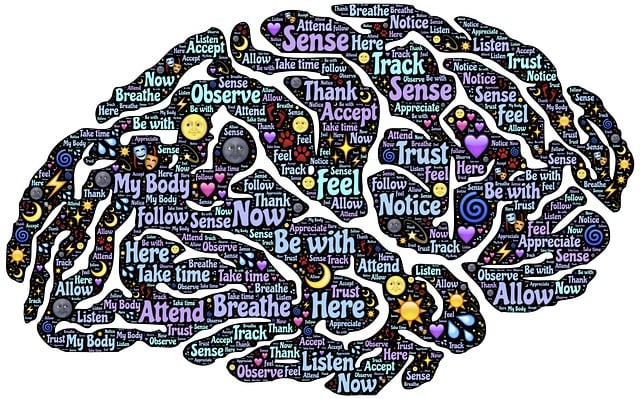
Modern mindfulness is credited as being popularised by Jon Kabat-Zinn, who redirected the focus away from awakening and towards being used as a therapy. It is characterised by what he describes as “non-judgemental awareness of the present moment.”
Modern mindfulness is perhaps best known as a stress-reduction therapy, called MBSRT (mindfulness-based stress-reduction therapy). Aside from stress, it has also been used to treat such things as depression, anxiety, trauma and anger.
What are the Differences Between Buddhist and Modern Mindfulness Meditation?
In contrast to Buddhism, modern mindfulness emphasises the reduction of stress, or psychological symptoms rather than pinpointing a cause. The intention and purpose for practising mindfulness in Buddhism, as is the case with all its teachings and practices, is freedom from suffering. To this end, Buddhism uses mindfulness as an aid to awakening, especially targeting the suffering related to our bodies, feelings, minds and thoughts.

Practicing Mindfulness Meditation and Buddhist Meditation
Comparing the focus of their practices, it is clear that Buddhist and modern mindfulness have different goals. But this does not invalidate one more than the other. While their focuses may differ, the essence of both is the same.
To be classed as mindfulness, there must be something they have in common. This is what Kabat-Zinn called non-judgemental awareness. Non-judgement is the doorway to insight. It is the space where we see the way things are. For Buddhism, it is seeing the truth of the four foundations of mindfulness. For modern mindfulness, the nature of one’s depression, anxiety, stress, and so on.
The key to non-judgemental awareness is to contemplate without preconceptions. It is our concepts aboutsomething which obscures us from seeing the reality of it. Seeing an object through this lens opens us up to its truth. This supports how it is used, in Buddhism, to illuminate our suffering and, in modern mindfulness, to reduce stress and improve our mental health.
Even if we see modern mindfulness as being removed from its Buddhist roots, it cannot be taken away from the very thing that makes it mindfulness. Both meditative practices are useful methods for alleviating our suffering and seeing the true nature of what we choose to be mindful of by having non-judgemental awareness.
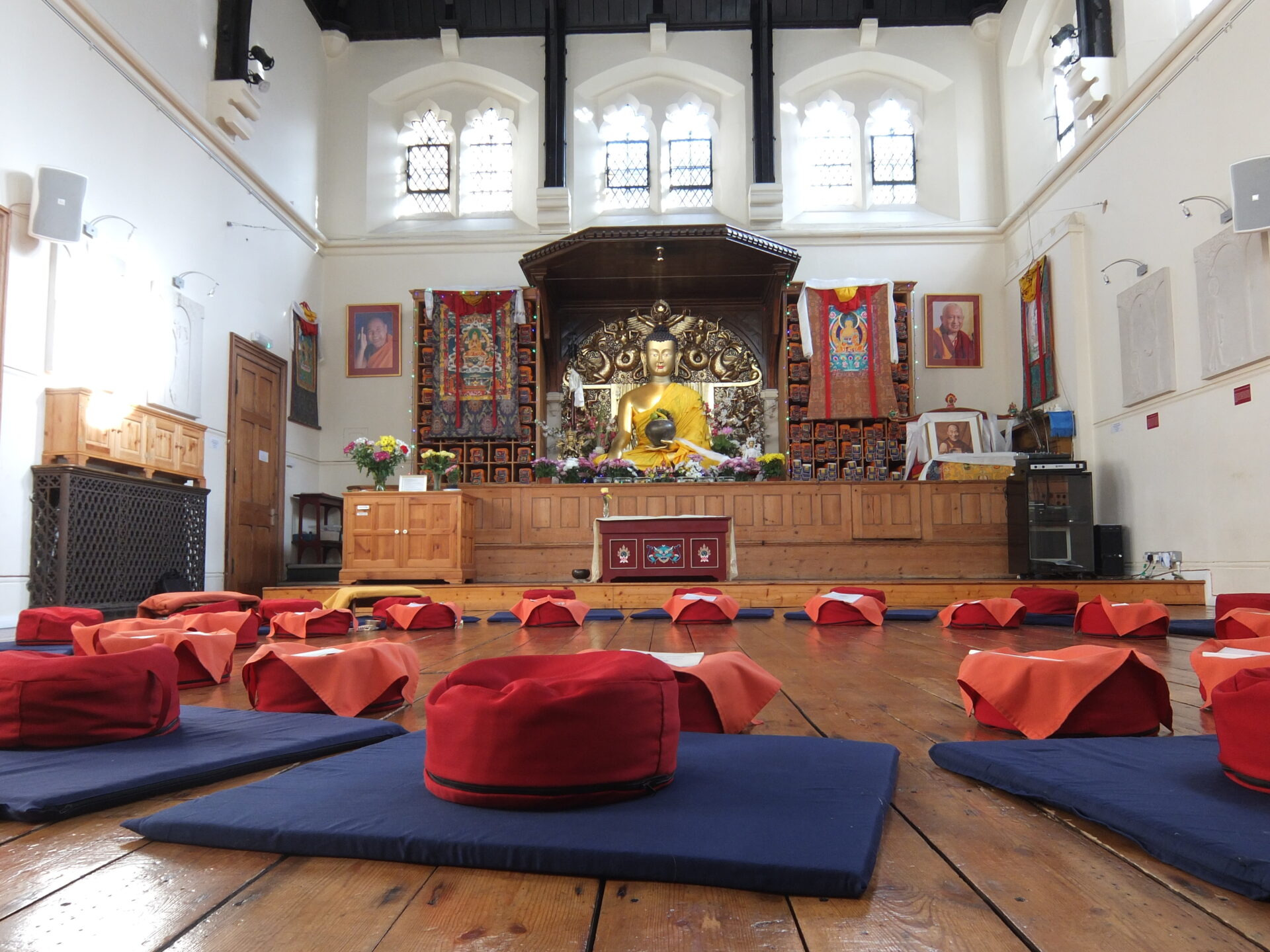
Mindfulness Meditation practice at Jamyang London Buddhist Centre
At Jamyang London Buddhist Centre we regularly offer weekly drop-in sessions on Buddhist, Universal Meditation and Mindfulness Meditation, both online and at the centre, to reduce stress in this busy world.
Additionally, we host also the MBSR Mindfulness for Stress Reduction course led by London Centre for Mindfulness, that follows the strict guidelines set out by Jon Kabat Zinn and the model created by Oxford Mindfulness Centre run by Mark Williams. Our Mindfulness Stress Reduction course is closely linked with Bangor University and SLAM.
If you’re interested to discover what Meditation is and how Mindfulness can help, check out our upcoming Meditation and Mindfulness courses and sessions to bring positive emotions into your daily life.
Author: Lewis Gwilt